
Digital Support for Fast-Moving Service Environments
Restaurants in the United States, especially in the quick service sector, need systems that can keep pace with customer demand while maintaining service quality. During busy periods, small delays at the ordering stage can affect the entire flow of the operation. As order volumes increase and customer expectations continue to rise, many operators are using self-service kiosks to support smoother, more efficient front-of-house experiences.
These digital ordering points are not designed to complicate the restaurant experience. Their value lies in simplifying it. By giving customers a direct, structured way to place orders, kiosks help reduce congestion, improve clarity, and support better overall service rhythm in high-traffic environments.
Helping Restaurants Move Customers Through the Ordering Stage More Efficiently
One of the biggest challenges in busy restaurant environments is managing the ordering stage without slowing down the rest of the operation. When too many customers rely on a single service counter, queues can form quickly, creating unnecessary pressure on both guests and staff.
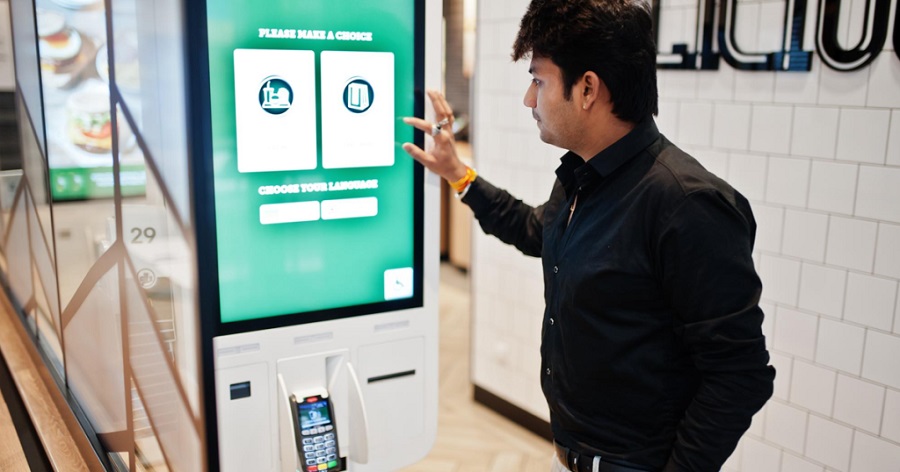
Kiosks help distribute that demand by adding more points of order access. Customers who are comfortable using digital touchscreens can move directly to an available kiosk, complete their order independently, and free up the counter for other service needs. This creates a more flexible and efficient front-end process, particularly during peak lunch and dinner periods.
Supporting More Accurate Orders
In restaurant operations, accuracy is closely tied to speed. Mistakes create delays, require corrections, and can interrupt kitchen flow. In traditional ordering environments, these issues often come from rushed verbal communication or missed details during busy service periods.
Self-service kiosks reduce that friction by allowing customers to review menu items visually and build orders step by step. Selections are entered directly, modifications are clearly presented, and the final order can be reviewed before payment. This helps reduce misunderstandings and supports a more consistent ordering process from front of house to food preparation.
Creating a Better Balance Between Technology and Staff Support
Digital ordering does not replace human service. It changes where staff effort is applied. In many restaurants, team members spend significant time repeating standard order-taking tasks while also managing customer questions, handling payments, and coordinating order handoffs. Kiosks can ease that pressure by taking on part of the routine interaction.
This allows staff to focus on food quality, customer assistance, and smoother service execution across the rest of the operation. In practice, that can lead to a more balanced restaurant environment, where digital tools support efficiency and staff remain available for the interactions that benefit most from a human presence.
Encouraging Customer Confidence Through Clarity
Customers are more likely to have a positive experience when the ordering process feels clear and controlled. In busy restaurants, some guests may feel rushed at the counter or uncertain about menu choices, especially when there are multiple options or customisations involved.
Kiosks create a more comfortable pace. Guests can browse visually, consider their options, and complete the process with fewer distractions. This added control can be especially valuable for repeat customers who want a fast and familiar process, as well as for first-time visitors who need a little more time. The technology supports confidence not by adding features, but by removing confusion.
A Practical Tool for Consistent Operations
For restaurant operators, consistency matters as much as speed. A kiosk-based ordering process offers a stable interface that operates consistently throughout the day, across shifts, and across multiple locations. This can help support brand consistency while also reducing variability in the customer journey.
Because kiosks can integrate with wider restaurant systems, they also fit naturally into established operational workflows. Orders move into the same preparation and fulfilment channels as other transactions, making kiosks a supportive extension of the existing setup rather than a disconnected addition.
Conclusion
Self-service kiosks help US restaurants improve speed, accuracy, and customer flow by making ordering more structured, reducing pressure at the counter, and supporting clearer interactions. Their strength lies in how effectively they fit into the daily realities of quick service environments. By helping restaurants manage demand more smoothly and giving customers a more direct way to order, kiosks continue to play an important role in modern restaurant operations.