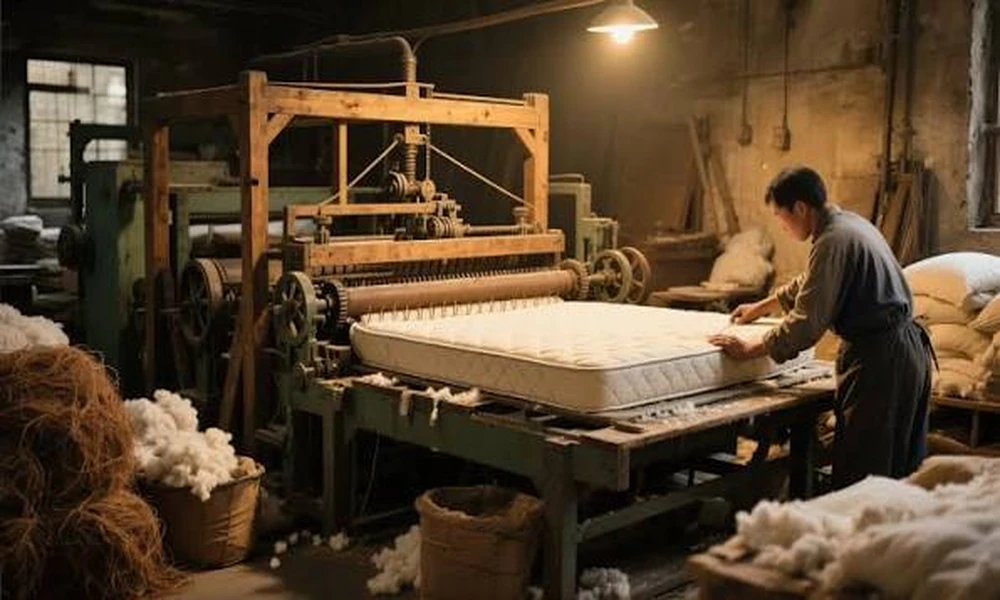

Because of the high volume of mattresses produced, accuracy and consistent production standards are required. All mattresses are required to be of a certain quality and durability. Manufacturers need to have reliable stitching during their manufacturing process. The little differences in sewing can make a difference in the quality of the mattress produced. With Automation, factories can guarantee consistent results with large volume orders.
Maintaining Consistent Stitching Quality Across Production Lines
Stitching is a critical aspect of making mattresses. All seams need to be even and in place. Manual sewing may cause variations in long production runs. Fatigue can be a problem for workers in repetitive and challenging tasks. These can impact the accuracy of stitching and overall consistency. Automated systems have pre-programmed stitching patterns for production cycles. Sewing automation equipment can help manufacturers to repeat the results from batch to batch. The programmed setting for machines ensures uniformity of seam formation. This helps to minimise variations in the manufacture of individual mattresses. Customers are assured of predictable finishing and durability of products.
Improving Production Speed Without Compromising Manufacturing Accuracy
The production of mattresses at a large factory is a challenging process. The desired product quality should not be sacrificed for faster operations. Automated sewing systems can help to achieve a balance of speed and precision. They work at a controlled speed on repetitive stitching operations. Operators can run at a steady pace during tough shifts. This minimizes the need for interruptions throughout the busy manufacturing environment. Production teams are able to finish bigger orders on time. Better workflow coordination also helps to leverage resources. Manufacturers are thus able to boost productivity without compromising on the required quality standards.
Reducing Human Errors During Repetitive Sewing Operations
There are a few repetitive stitching activities that are performed in the mattress manufacturing process every day. Care must be taken in these operations, and they must be done consistently. There are potential production errors with manual processes. Mattresses can be greatly affected in appearance by incorrect seam placement. Structural reliability may also be compromised by uneven stitching. These risks are minimized by the use of automated systems which operate according to a set of programs. They keep accurate movements while performing repeated sewing operations. Sensors and controls are used to keep track of significant machine functions. This helps to ensure consistent manufacturing and reduces potential manufacturing mistakes.
Strengthening Quality Control and Long-Term Manufacturing Efficiency
Quality inspections are much simpler, due to consistent manufacturing processes. The standardised stitching allows for rapid detection of production problems. Supervisors have access to the ability to track production against quality standards. Automated systems offer greater consistency in performance as well. Minimising material waste can be a major benefit from reduced errors. Reducing the number of rejects enhances manufacturing efficiency. Regular maintenance also helps to ensure reliable machine operation. As factories have to cope with growing demands for production, reliable machinery plays a vital role. These enhancements boost customer satisfaction and competitiveness of the business. Stable manufacturing is ultimately conducive to sustainable growth in the mattress industry.