
Key Takeaways
- Investing in an automotive CNC machine is justified when production volume is stable and predictable.
- In-house custom CNC machining reduces dependency on external suppliers and shortens lead times.
- Cost recovery depends on utilisation rate, maintenance planning, and skilled operator availability.
- Complex part requirements often justify ownership over outsourcing.
- Poor demand forecasting can turn a high-value CNC asset into an underutilised cost burden.
Introduction
Deciding when to invest in an automotive Computer Numerical Control (CNC) machine is not simply a question of budget. It is a strategic decision tied to production scale, operational control, and long-term cost efficiency. Many automotive businesses rely on outsourced custom manufacturing services like custom CNC machining in the early stages, but there comes a point where internal capability becomes more viable. Comprehending that tipping point requires a clear evaluation of demand, technical requirements, and operational readiness.
When Production Volume Becomes Predictable
The most straightforward trigger for investment is consistent production demand. If a business regularly produces the same automotive components at moderate to high volume, outsourcing contract manufacturing services becomes less efficient over time. External suppliers add lead times, margin costs, and scheduling limitations. Bringing an automotive CNC machine in-house allows tighter production control and improved turnaround times at this stage. However, sporadic or project-based demand does not justify the capital expenditure, as machine utilisation will remain low and return on investment will be delayed.
When Lead Time and Control Are Critical
Outsourcing custom manufacturing services and CNC machines introduces dependency on third-party timelines. This instance becomes problematic when production schedules are tight or when design changes are frequent. Owning an automotive CNC machine allows immediate adjustments without renegotiating supplier timelines. This approach is especially relevant for manufacturers dealing with prototyping, iterative design improvements, or urgent replacement parts. Greater control also reduces the risk of supply chain disruptions, which can halt production entirely if external vendors are delayed.
When Part Complexity Increases
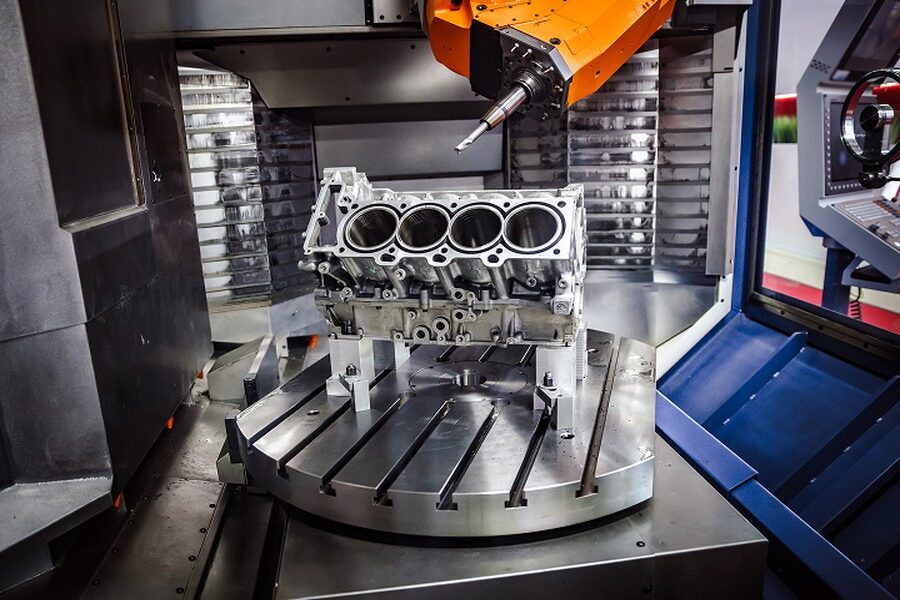
Automotive components are becoming more complex, particularly with advancements in electric vehicles and performance engineering. Complex geometries, tight tolerances, and specialised materials often require advanced machining capabilities. Relying on external contract manufacturing services like custom CNC machining providers, in such cases, can limit flexibility and increase costs due to specialised service pricing. Investing in an automotive CNC machine with multi-axis capability allows manufacturers to handle intricate designs internally while maintaining quality standards and reducing per-unit cost over time.
When Cost Efficiency Improves Over Time
An automotive CNC machine is a significant capital investment, but it can become cost-effective when evaluated over the long term. Businesses that frequently outsource custom manufacturing services accumulate recurring costs that may eventually exceed the cost of ownership. Internalising custom CNC machining eliminates supplier margins and allows better cost forecasting. However, this only holds true if the machine operates at a high utilisation rate. Idle machines represent sunk costs, so accurate production planning is essential before committing to purchase.
When Skilled Workforce and Infrastructure Are Ready
Owning an automotive CNC machine requires more than just capital. It demands trained operators, maintenance capability, and proper facility setup. Remember, without these, productivity suffers and machine downtime increases. Companies transitioning from outsourced custom contract manufacturing services like CNC machining must ensure they have the technical expertise to operate, program, and maintain CNC equipment. Investing prematurely without these resources often leads to inefficiencies that negate potential cost savings.
Conclusion
Investing in an automotive CNC machine makes sense when demand is consistent, control over production is critical, and part complexity justifies in-house capability. It also requires a realistic assessment of utilisation, workforce readiness, and long-term cost benefits. Businesses that move too early risk underutilisation and operational inefficiencies, while those that delay may continue absorbing unnecessary outsourcing costs. The decision should be based on measurable production needs rather than assumptions, ensuring that custom CNC machining becomes a strategic advantage rather than a financial burden.
Visit Disk Precision Group – USA and discover our custom CNC machining solutions built to support demanding automotive requirements.