
Every time a mattress is discarded, it sets off a chain reaction that quietly undermines our environment. With millions of mattresses headed to landfills annually across the globe, the real cost of a good night’s sleep is only beginning to haunt us.
The Growing Problem of Mattress Waste
Tossing an old mattress might feel like the end of its story, but it’s just the beginning of a long environmental saga. Cities and towns worldwide struggle to manage a relentless flow of bulky bedding. Mattresses are difficult to compact, often clogging landfill space far faster than their numbers suggest.
Why Millions of Mattresses End Up in Landfills
Convenience plays a big role. Disposal is often the simplest, cheapest option for both consumers and waste management systems. Many jurisdictions lack infrastructure for large-scale mattress recycling, leaving landfills as the default destination.
The Slow Breakdown: Decades of Environmental Persistence
A mattress is not a banana peel. Left buried, it can take several decades to decompose. During this time, the springs, foams, and textiles inside endure, occupying valuable space and entangling machinery at landfill sites.
Hidden Hazards: Chemicals and Materials in Mattresses
Mattresses contain a cocktail of synthetic foams, flame retardants, and chemicals that don’t just disappear underground. As they slowly break down, these compounds can leach into their surroundings, raising the stakes far beyond wasted space.
Environmental Consequences of Mattress Landfilling
Letting millions of mattresses rot underground is more than a storage issue. The repercussions ripple through soil, air, and communities.
Soil and Water Contamination Risks
As mattresses degrade, chemicals leach out and can make their way into local groundwater. Over time, this contamination poses risks to ecosystems and public health, especially in areas where landfills are not properly lined.
Greenhouse Gas Emissions from Decomposing Mattresses
Organic components (like cotton or wool) release methane when they break down anaerobically. Methane is a potent greenhouse gas, accelerating climate change in ways that go unnoticed with every discarded mattress.
Impact on Land Use and Waste Management Systems
Landfills are already under pressure. Bulky mattresses eat up disproportionate amounts of space, shortening landfill life spans and straining municipal budgets. This forces cities to open new sites or transport waste further away, compounding carbon emissions.
Existing Recycling Efforts: A Glimpse of Hope
Change is possible, and mattress recycling programs are proving their value. But how do they actually work?
How Mattress Recycling Works: The Process Explained
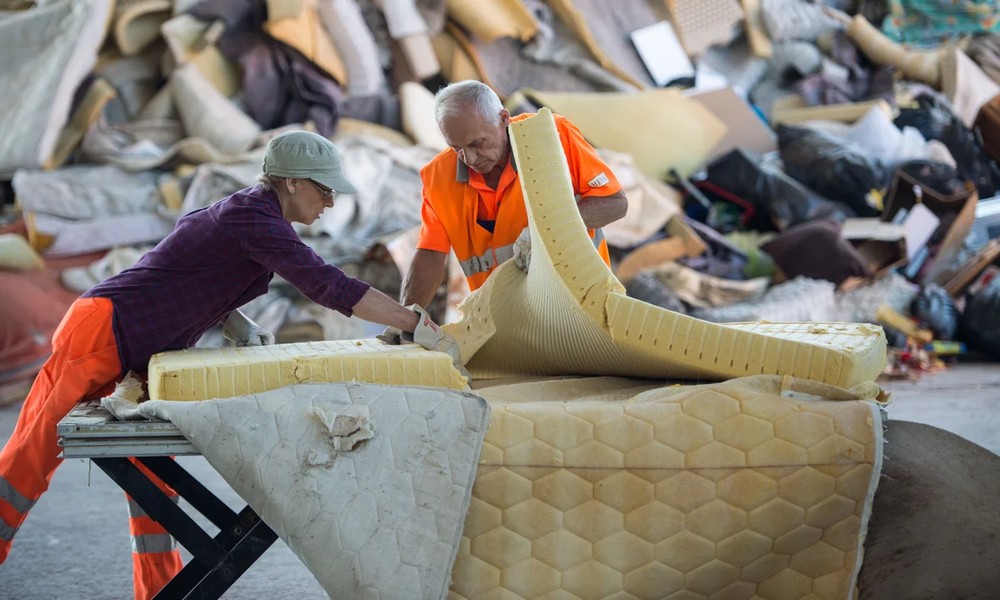
First, mattresses are collected and delivered to specialized facilities. Workers strip away the fabric, separate out the metal springs, foam, and wood, then send these materials to manufacturers for reuse in new products like carpet padding, insulation, or steel.
Success Stories: Over 4 Million Mattresses Recycled in Canada
Canada offers a shining example, with over four million mattresses recycled through organized programs. Each recycled mattress diverts bulky waste from landfills and returns valuable materials to the manufacturing loop.
Innovations Driving Sustainable Mattress Recycling
Some facilities are automating the dismantling process, while others experiment with new uses for recycled fibers. These innovations promise higher efficiency and greater environmental returns.
Barriers to Widespread Mattress Recycling
Not every mattress gets a second life. Several barriers persist.
Logistical Challenges: Collection and Transportation
Mattresses are awkward and heavy, making them hard to collect in bulk. Efficient transportation from homes to recycling centers remains a stubborn hurdle.
Economic Considerations: Costs vs. Benefits
Recycling is often more expensive than landfilling in the short term. The costs of labor, machinery, and sorting can deter municipalities and businesses, especially without incentives.
Lack of Awareness and Consumer Participation
Many people are unaware that recycling options exist, or how to access them. Without consumer participation, even the best recycling infrastructure falls flat.
Recyc-Matelas: A Model for Sustainable Mattress Disposal
Among the leaders tackling this crisis is Recyc-Matelas, a company setting new standards for mattress recycling in Canada.
Overview of Recyc-Matelas’ Approach and Services
Offering dedicated pickup services in Quebec, Ontario, Toronto, and Montreal, Recyc-Matelas dismantles mattresses and diverts up to 95% of their contents from landfills.
Environmental Benefits Achieved So Far
By recycling over four million mattresses, Recyc-Matelas has prevented thousands of tons of material and chemicals from entering the waste stream, while supporting green jobs in local communities.
How Recyc-Matelas Serves Quebec, Ontario, Toronto, and Montreal
Their regional focus ensures urban centers and surrounding areas have access to convenient, reliable alternatives to landfill dumping, making mattress recycling a mainstream option.
What Individuals Can Do to Reduce Mattress Waste
Small decisions can have a big impact when multiplied by millions.
– Opt for mattresses made from recyclable or natural materials.
– Use local recycling programs rather than curbside bulk pickup.
– Advocate for better recycling laws and support brands that take back old mattresses.
The Role of Governments and Industry in Mattress Waste Solutions
Systemic change starts with policy.
Policy Initiatives Encouraging Mattress Recycling
Provinces and countries are exploring mandates for extended producer responsibility, requiring manufacturers to fund recycling programs.
Partnerships Between Manufacturers and Recycling Centers
Collaborations make it easier to collect, transport, and recycle mattresses at scale, closing the loop and creating new markets for reclaimed materials.
Incentives and Regulations to Reduce Landfilling
Fees for landfill disposal, tax breaks for recyclers, and strict regulations can shift the balance in favor of sustainability.
Moving Forward: Creating a Mattress Waste-Free Future
The future depends on expanding recycling infrastructure globally and educating the public about why it matters.
Innovators are exploring a circular mattress economy, where materials flow from new beds to recycling centers and back again. Experts point out that solutions such as Recyc-Matelas mattress recycling are not just a Canadian success story, but a blueprint for communities everywhere seeking to break the cycle of waste.
The day we stop burying millions of mattresses is the day we stop burying the planet’s future under our old beds.